Goodreads Book Giveaway
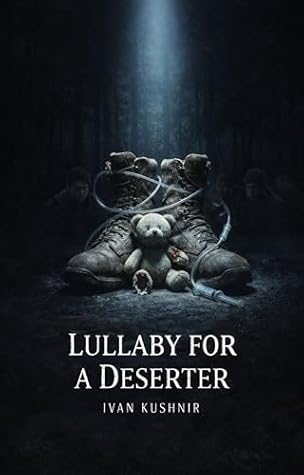
Lullaby for a Deserter
by Ivan Kushnir
Giveaway ends April 15, 2026.
See the giveaway details at Goodreads.
Giveaway ends April 15, 2026.
See the giveaway details at Goodreads.
America has always been the ultimate human meat-grinder, a factory that chews up wave after wave of raw talent and spits out the next chapter of its endless hustle.
The Alaskan Pact represents the definitive collapse of the post-1945 liberal order, marking a transition from a world of shared values to a brutal landscape of neo-imperial pragmatism. In this emerging reality, the traditional alliances that defined the twentieth century are being dismantled in favor of a new global partition, a secret understanding between Washington and Moscow that mirrors the dark logic of the Molotov-Ribbentrop Pact. This contemporary realignment is catalyzed by a dramatic American shift toward territorial expansionism, specifically centered on the strategic annexation of Greenland.
On December 15, 2025, in Guaíba (near Porto Alegre, Brazil), a storm with gusts reported around 80–90 km/h toppled a ~30-meter replica of the Statue of Liberty installed outside a Havan megastore. Videos of the figure slowly bending and then crashing onto the parking lot went viral; no injuries were reported, and the concrete base reportedly remained standing.
Adam Smith, the Scottish economist of the 18th century, is considered the father of modern economics. In his work "The Wealth of Nations" (1776), he outlined the theory of absolute advantage, which explains why countries benefit from specialization and trade. According to Smith, each country should focus on producing goods that it can create more efficiently than others, meaning with lower resource costs per unit of output. Then, through trade, nations exchange these goods, increasing overall welfare. For example, if Portugal produces wine cheaper than England, and England produces cloth, then specialization and exchange make both countries richer.
This idea seems simple and logical, but in the real world, it takes paradoxical forms, especially when it comes to countries with distorted economies, such as the Russian Federation (RF). Russia, despite its vast natural resources, demonstrates a classic example where absolute advantages turn into a trap. Let's examine why the RF cannot compete in "peaceful" sectors but, according to some assessments, has found its "niche" in something destructive—weapons, fear, and terror.
Imagine it’s 1940. London is burning. German bombers rain death upon the city while Britain fights alone. And suddenly, the United States appears—not with help, not with weapons, but with a “peace plan.” The proposal: Britain should surrender to Hitler, recognize his conquests, cut its army, and stay “neutral.” In exchange, Washington would declare that it had brought peace to Europe. That’s exactly what Donald Trump is trying to do to Ukraine today, only the dictator’s name is Putin.
Once upon a time, the Netherlands was a model of “smart energy.”
A green tariff of €0.06 per kilowatt-hour encouraged citizens to install solar panels, invest in the future, and join the movement toward energy independence. You produced clean power — the state rewarded you.
But now the logic has flipped upside down: the tariff has become negative — –€0.06 per kWh. In other words, citizens not only give away their electricity for free, but actually have to pay for doing so.
This isn’t just an economic paradox. It’s the anti-utopia of the green transition, where initiative and trust are punished instead of supported.
